If your child has recently been diagnosed with autism, you may suddenly find yourself hearing a lot of unfamiliar terms. One of the most common is ABA therapy, or Applied Behavior Analysis.
Maybe your pediatrician recommended it. Maybe another parent mentioned it. Or perhaps you've started researching autism services and keep seeing ABA everywhere you look.
So, what exactly is ABA therapy? What happens during a typical day? What skills can children work on? And how can you tell whether an ABA provider is a good fit for your family?
ABA is an evidence-based approach grounded in the science of learning and behavior. Behavioral approaches, including ABA, are widely used to support autistic people in developing individualized skills, and progress is typically measured throughout treatment.
But that definition only tells part of the story.
Modern ABA can look very different from the highly structured therapy parents sometimes imagine. At The Behavior Project, our approach centers on play, relationships, individual interests, and meaningful everyday experiences. The goal isn't to change who a child is. It's to help them develop useful skills that allow them to communicate, connect, participate, and become more independent in ways that matter to them and their family.
Here's what parents should know.
What Does Modern ABA Therapy Look Like?
Parents sometimes picture ABA as a child sitting across from an adult at a table completing repetitive tasks.
ABA can include structured teaching when appropriate, but that isn't the only way skills can be taught.
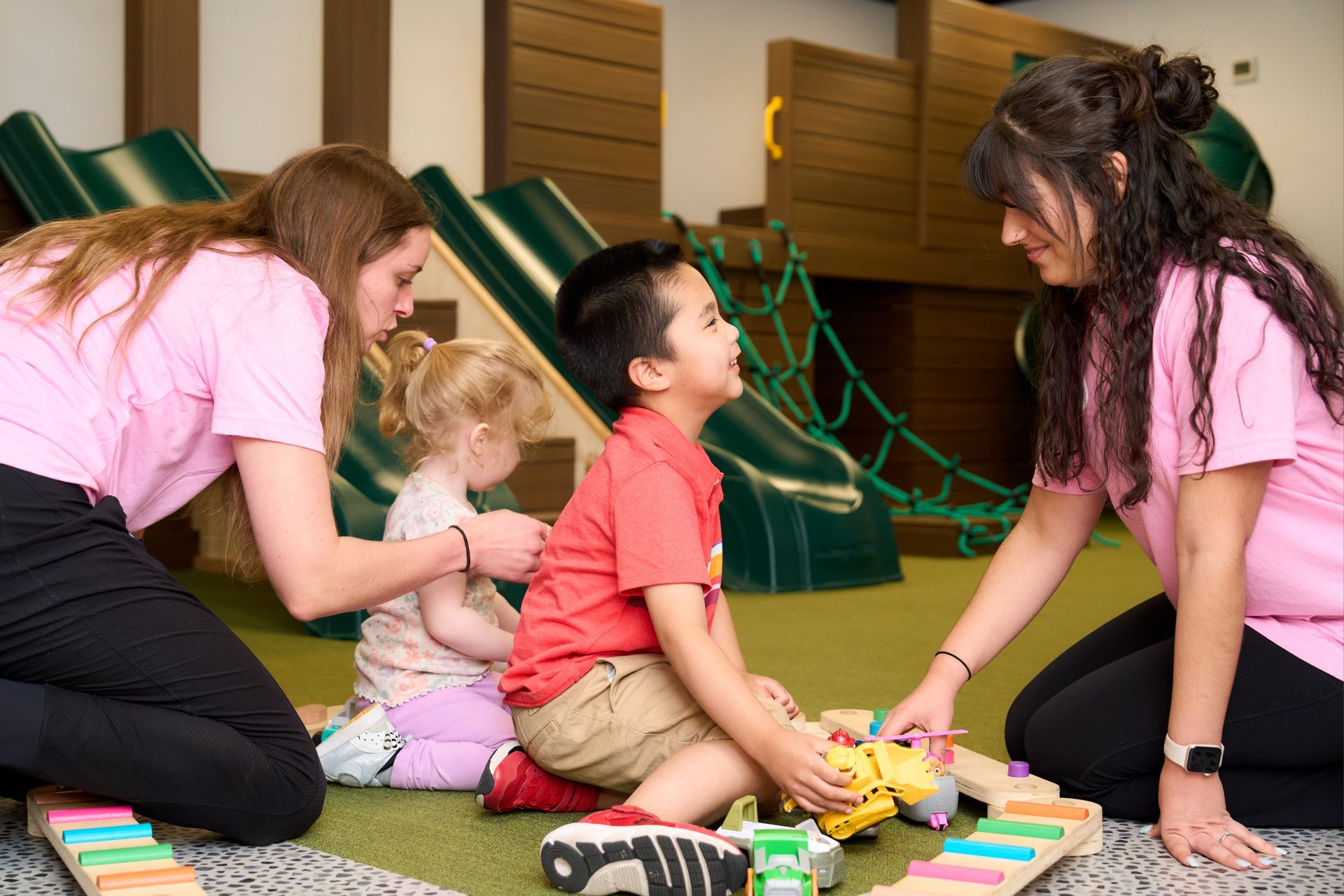
Naturalistic approaches create opportunities for learning during play, social interactions, daily routines, and activities that are meaningful to the child. The CDC, for example, distinguishes structured approaches such as Discrete Trial Training from naturalistic ABA approaches such as Pivotal Response Training.
At The Behavior Project, our program is heavily influenced by Naturalistic Developmental Behavioral Interventions, commonly called NDBIs. This approach combines principles from ABA with developmental science, relationships, child interests, and learning through natural interactions.
That means therapy might involve building with blocks, pretending to cook, playing a game, exploring sensory activities, interacting with another child, getting ready for snack, or moving from one activity to the next.
There is still a purpose behind the activity.
The difference is that learning becomes part of something the child is already motivated to do.
Why Does Play Matter in ABA Therapy?
For young children, play isn't just entertainment.
It's one of the primary ways they explore their environment, interact with other people, solve problems, communicate, experiment, and learn.
Imagine a child loves playing with toy cars. A therapist might use that interest to create opportunities for requesting, taking turns, following another person's lead, expanding language, tolerating small changes, or engaging in pretend play.
Another child might love music. Songs and movement could become opportunities to practice imitation, communication, waiting, shared attention, and participation.
The activity itself isn't the goal.
It's the doorway into learning.
This philosophy is central to our program. Therapy follows children's interests and creates intentional learning opportunities through play and real-life moments rather than expecting every child to learn in exactly the same way.
How Is Progress Measured?
ABA is data-driven, but that doesn't mean children should feel like they're constantly being tested.
Therapists collect information about how a child is progressing toward individualized goals during regular activities and interactions.
For example, if a child is learning to independently request help, the team may track how often they do so and how much assistance they need.
Over time, that information helps the BCBA determine whether the current strategy is helping.
If progress is occurring, the team can continue building on it.
If progress has stalled, the data can help identify where the treatment plan may need to change.
This ongoing measurement is an important characteristic of ABA. The CDC notes that ABA involves tracking and measuring progress as skills are developed.
Why Local Ownership and Accreditation Matter When Choosing an ABA Provider
Picking an ABA provider is harder than it looks from the outside. Many companies advertising heavily in the Kansas City area are private equity-backed, which shapes how they staff, how they operate, and how much any individual clinician actually knows your child from one month to the next.
The Behavior Project is locally owned and led by Dr. Kate, a BCBA-D, which is a doctoral-level credential. It's one of only two ABA practices in the Kansas City area owned at that clinical level, meaning doctoral judgment is built into how every program is designed, not brought in occasionally to review someone else's work. That distinction matters when your child's plan is being written.
The clinic is also the only provider in the area that's both BHCOE (Behavioral Health Center of Excellence) accredited and doctor-owned. BHCOE accreditation is an independent, national quality standard you can verify yourself.
Over 8 years across its Johnson County locations, The Behavior Project has served more than 500 children. That track record grew through outcomes and referrals, from families who stayed, sent neighbors, and came back with younger siblings.
ABA Therapy Should Help Your Child Build a Bigger World
ABA can sound technical when you first encounter it.
Behavior analysis. Assessments. Treatment plans. Data. Reinforcement. Generalization.
But behind all of those terms is a much simpler goal: helping your child develop meaningful skills they can use in everyday life.
It's communicating what they need.
Joining another child during play.
Trying something unfamiliar.
Getting through a difficult transition.
Completing part of a routine independently.
Connecting with the people who matter to them.
At The Behavior Project, we believe effective ABA therapy combines strong clinical practice with play, relationships, compassion, and a genuine understanding of the child behind the treatment plan.
If you're exploring ABA therapy in Overland Park or the greater Kansas City area, we're here to answer your questions, show you what our approach looks like, and help you decide whether The Behavior Project is the right fit for your family.
Contact our team!
Small Steps.
Meaningful Progress.

Fill out our New Patient Inquiry Form to get started.

Connect with our clinical team and schedule a tour.

We verify your insurance and request an assessment.

Your child completes a comprehensive clinical assessment.

Our team develops your child’s personalized treatment plan.

Begin your child’s first day of therapy with our team.
Explore More